Hair Fall Care: Understand the Cause, Build a Better Routine
Hair fall can be confusing. Is it normal shedding, breakage or something more? Learn what's really happening, what habits may help, and how to build a simple, effective hair-care routine — naturally.

What Is Hair Fall?
Hair fall can mean several different things, including normal hair shedding, increased shedding, hair breakage or gradual thinning. Normal shedding happens as part of the hair-growth cycle, while noticeable or persistent hair loss can have many possible causes. Stress, illness, nutritional deficiencies, hormonal changes, genetics, tight hairstyles and damaging hair practices are among the factors that can be involved.
Hair fall can mean different things.
It can be temporary shedding, increased shedding, breakage or a sign of an underlying health condition. Understanding the cause helps you choose the right approach.
Based on dermatology guidance from the American Academy of Dermatology.Is Your Concern Really Hair Fall?
More Hair on Your Comb
You notice more strands while combing or brushing.
Increased Shedding
More hair than usual in your shower, pillow or on your clothes.
Hair Breakage
Hair breaks easily, often appearing as shorter strands.
Thinning
Your hair feels less dense or your part looks wider.
Scalp-Care Concern
Itching, flaking or irritation may make you pay more attention to your scalp and hair routine.
«These experiences can have different causes. This page provides general hair-care information and product guidance, not a diagnosis.»
Hair Shedding, Hair Breakage or Hair Loss?
Everyday Shedding
Some shedding is part of the normal hair cycle. A certain amount of daily shedding is expected. Shedding alone does not automatically mean there is a hair-loss condition.
Hair Breakage
The hair shaft breaks rather than the whole strand shedding from the root. Broken strands may appear shorter or uneven. Heat, friction, chemical processing and damaging hair practices can contribute.
Hair Loss / Thinning
Persistent thinning, receding hairlines or bald patches can have different causes. Sudden or dramatic changes deserve attention. The underlying cause may need professional evaluation.
Why Can Hair Fall Happen?
There Isn't One Universal Cause. Hair fall does not have one universal cause. It can involve temporary shedding, breakage, gradual thinning or a specific hair-loss condition.
1. Stress & Major Life Events
2. Illness or Recovery
3. Nutrition
4. Hormonal Factors
5. Genetics
6. Hair Practices
7. Scalp Conditions
When Hair Fall Needs More Than a Hair-Care Routine
A supportive hair-care routine can help you care for your scalp and hair and reduce avoidable hair-care stress. But it cannot determine why you are losing hair.
Consider professional evaluation if hair loss is sudden, severe, patchy, persistent or unexplained, or if you have significant scalp pain, lesions or irritation or other concerning symptoms.
Don't wait for a product to diagnose the problem. Understand the problem first.
Our Approach: Care Before Claims
Hair fall has different causes, so we don't want every hair concern to become a product pitch.
First understand what you are experiencing. Then choose products for their actual role in an everyday hair-care routine.
01 — Understand
What are you actually experiencing?
02 — Care
Build a suitable everyday hair-care routine.
03 — Know the Limits
A hair-care routine is not a substitute for evaluating unexplained hair loss.
Build a Simple Hair-Care Routine
Herbal Hair Cleanser Bar
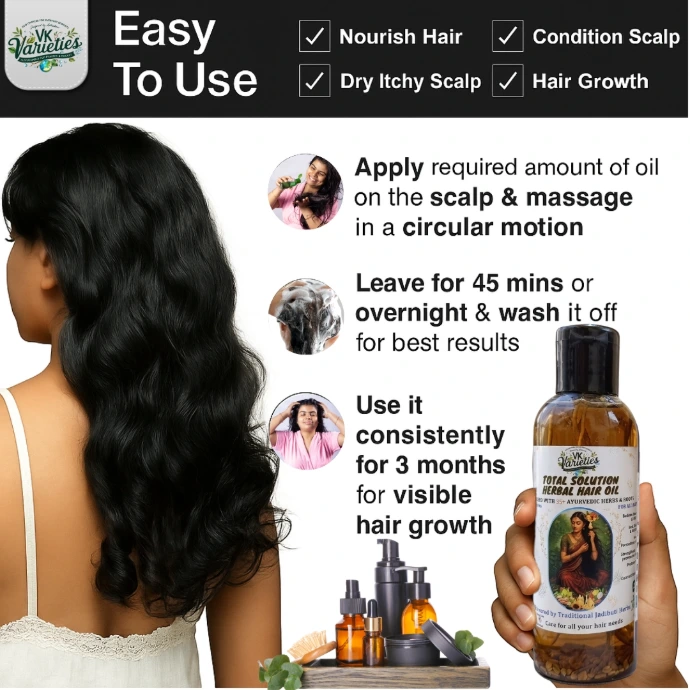
Total Solution Kshirpak-based Ayurvedic Hair Oil
22-Herb Hair Therapy Pack
Affordable Total Hair Care Combo
Choose the Part of Your Routine You Need
Why We Chose These Products
A useful hair-care routine does not need a product for every possible concern. We structured this routine around different roles: cleansing, regular hair/scalp care and additional herbal care.
- Cleanse: The Herbal Hair Cleanser Bar is included for regular cleansing.
- Care: The Ayurvedic Hair Oil is included as part of regular hair and scalp care.
- Additional Care: The Hair Therapy Pack adds another herbal-care step to the routine.
The complete combo brings these three parts together for people who prefer one simple routine.
Simple Habits That Can Support Healthier Hair Care
Be Gentle
Avoid unnecessarily rough handling of the hair and scalp.
Avoid Unnecessarily Tight Hairstyles
Repeated pulling can contribute to hair damage and some forms of hair loss.
Limit Excessive Heat
Avoid unnecessary repeated exposure to high heat.
Pay Attention to Your Scalp
Notice persistent irritation, flaking or other changes.
Keep Your Routine Consistent
Give your routine time to become a regular habit rather than constantly changing products.
Look Beyond Products
Hair concerns can involve nutrition, stress, illness, hormones, genetics and hair-care practices.
Hair Fall Questions, Answered
Understand Your Hair. Care for It Mindfully.
The right hair-care journey starts with understanding what you are experiencing. Choose practical everyday care, stay consistent and know when a concern needs more than a product.
Shop Hair Care Explore Hair Solutions
Care is one part. Styling is another. Explore handmade hair accessories for mindful everyday styling.
Explore Handmade Hair Accessories